Pre-HUD · June 15, 1976 · Age caps · NC & SC

Can You Move a Pre-1976 Mobile Home?

You can usually tow a pre-1976 home — but North Carolina and South Carolina counties and parks frequently won't let you set one down. Here's the HUD line, the zoning age caps, and how to know whether your old home is a move or a demolition.

Licensed & insured · NC & SCNCDOT-certified escorts24-hour written quoteOne crew, start to finishPermits pulled in every county Licensed & insured · NC & SCNCDOT-certified escorts24-hour written quoteOne crew, start to finishPermits pulled in every county

Get a free quote

Back within 24 hours — no obligation.

Goes straight to our crew. We never sell or share leads.

Quick answer
Can a pre-1976 mobile home be moved and placed?
You can usually tow a pre-1976 (pre-HUD-Code) home, but you often can't legally site it. Homes built before June 15, 1976 were never held to the federal HUD Code, and many NC and SC counties and parks refuse to permit placing one. Combined with a corroded older frame, that makes demolition the smarter call on most pre-1976 single-wides. Mobile Home Mover Pro inspects the unit and checks the destination's age rules before quoting either a move or a demo.

Can you move a pre-1976 mobile home? It's the most misunderstood question in the business, because the answer splits in two: yes, you can usually tow it, and no, you often can't put it where you want it. The pivot is a single date — June 15, 1976 — and a single fact: a pre-1976 home was built before there were any federal standards for manufactured housing, so the law, the zoning office, and the physics of the frame all treat it differently from a modern HUD-Code home. Mobile Home Mover Pro inspects the unit, checks the destination's rules, and tells you honestly whether you're looking at a move or a demolition before a dollar is spent.

The June 15, 1976 line — what actually changed

On June 15, 1976, the federal HUD Code (24 CFR Part 3280) took effect and, for the first time, set a national construction and safety standard for manufactured homes — covering the steel frame, the hitch and running gear, anchoring and wind resistance, fire safety, and energy. Homes built after that date are "HUD-Code" homes, engineered to be transported, set, and tied down to a federal spec. Homes built before it are "pre-HUD" and met only whatever the manufacturer chose. That's why the date isn't a technicality — it's the line that decides whether the home was ever designed to be moved safely, and it's the line counties use to decide whether they'll accept it.

Legal to tow vs. legal to place — the trap

Here's the distinction that catches people: towing a home is governed by state transport law, which generally doesn't bar a home by age, while siting it is governed by local zoning, which frequently does. So a pre-1976 home can be perfectly legal to haul down the highway and completely illegal to set down at the other end. The move starts fine and dies at the destination's permit counter. This is exactly the scenario that leaves an owner having paid to relocate a home that now has nowhere legal to live. The full permit chain for the haul itself is on our mobile home moving permit guide — but the permit that matters most for an old home is the one at the destination.
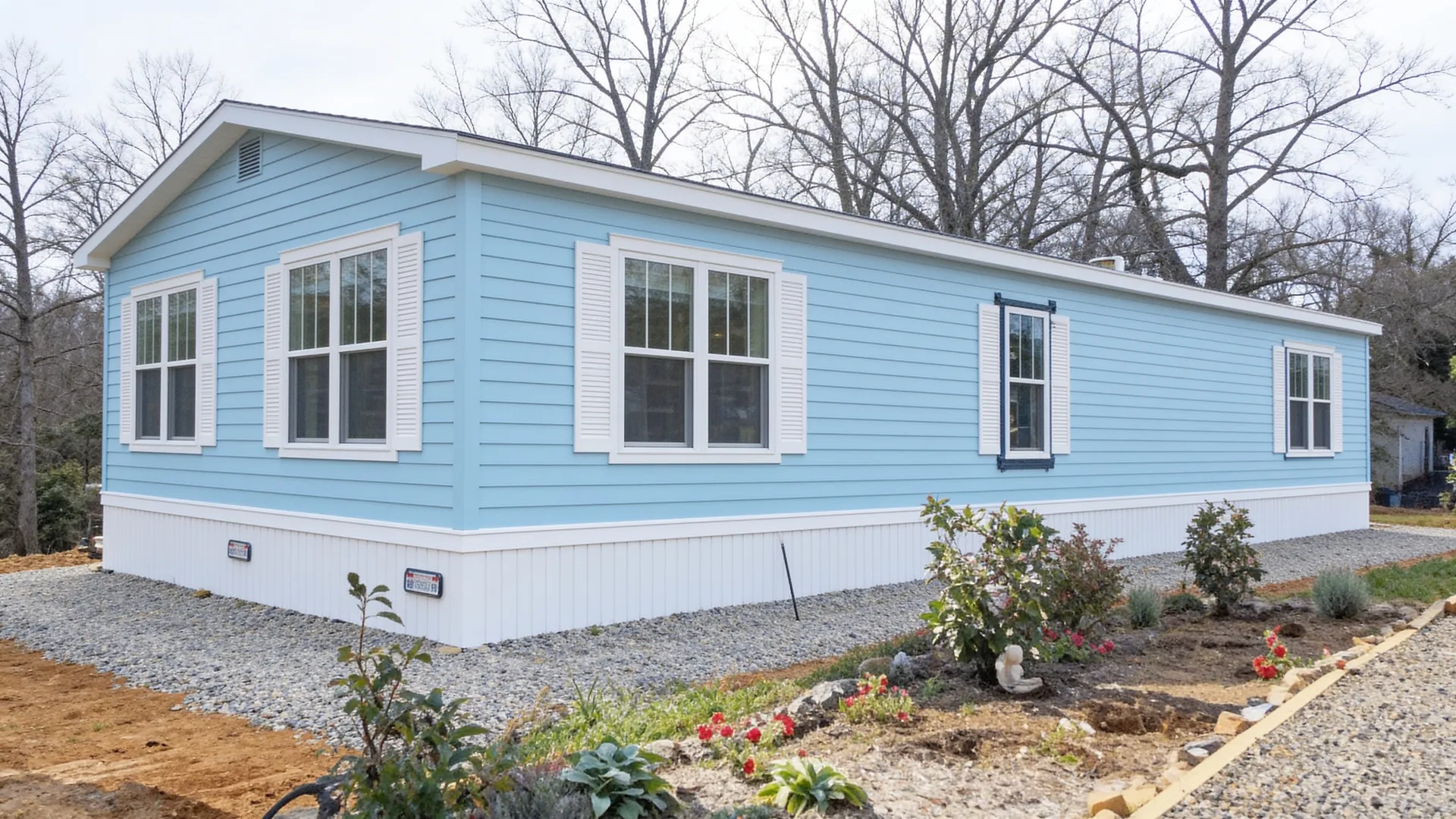
An older single-wide manufactured home on a rural lot
A pre-1976 home can often be towed but not legally sited — many counties and parks won't permit a non-HUD-Code unit at all.

Why counties and parks cap age

Local governments restrict pre-1976 placement through zoning because a pre-HUD home lacks the engineered frame, tie-downs, fire safety, and wind rating the HUD Code later required. Many North Carolina and South Carolina counties and towns enforce an age cap — refusing to permit installation of a unit older than 10, 15, or 20 years, and excluding pre-1976 homes outright — and manufactured-home parks layer their own age rules on top, often stricter than the county's. The UNC School of Government's manufactured housing and zoning summary lays out how localities are allowed to regulate by age. The rules differ county to county, so the only reliable answer is to check the specific destination — which we do during the quote. The state-level frameworks are on our North Carolina and South Carolina mobile home moving laws pages.

The frame reality — and when demolition wins

Even where placement is allowed, the pre-1976 frame usually has the last word. Decades on a pad leave the I-beams, hitch, and tie-down points corroded or fatigued, the axles and tires long gone, and the floor soft over the outriggers — so a "move" quietly becomes a move plus new running gear, frame repair, and re-anchoring. On most pre-1976 single-wides those repairs approach or exceed the value of the home, and mobile home demolition and haul-off — typically a few thousand dollars — is the better spend. We inspect the chassis the same way we would for any move (the four systems are detailed on can a mobile home be moved), then put the move number and the demo number on the same quote so the decision is made with real figures. Tell us the home's age and location on the form and Mobile Home Mover Pro returns both within 24 business hours.

Questions

Pre-1976 mobile homes — straight answers

Can a mobile home built before 1976 legally be moved?
In most cases you can legally tow a pre-1976 home — transport law doesn't bar it by age — but you frequently can't legally place it where you're going. The dividing date is June 15, 1976, when the federal HUD Code (24 CFR Part 3280) took effect. Homes built before that date are "pre-HUD" and were never held to the federal construction, frame, and anchoring standard. Many North Carolina and South Carolina counties and most manufactured-home parks refuse to permit siting a pre-1976 unit at all. So the move can be legal to start and impossible to finish — which is why the destination's rules have to be checked first.
Why do counties and parks ban pre-1976 mobile homes?
Two reasons: safety and standards. A pre-HUD home lacks the engineered frame, tie-down points, fire-safety, and wind-rating that the HUD Code made mandatory after 1976, so local governments treat them as higher-risk and lower-value. Through zoning, counties and towns enforce age caps — commonly refusing any unit older than 10, 15, or 20 years, with pre-1976 excluded outright — and parks set their own age rules on top. The UNC School of Government's manufactured housing and zoning summary explains how localities are permitted to regulate placement by age and standard.
How do I tell if my mobile home is pre-1976?
Look for the HUD certification label — a red metal plate riveted to the exterior end wall — and the HUD data plate, a paper label inside a kitchen cabinet or bedroom closet that lists the build date and wind zone. If there's no HUD tag at all, the home is almost certainly pre-1976, because the tag has been required on every home built since June 15 of that year. A title or previous tax record may also show the model year. The presence or absence of that red tag is the fastest way to know which side of the line your home is on — and it changes the conversation from "how do we move it" to "should we."
Is it worth moving an older mobile home, or should I demolish it?
For most pre-1976 single-wides, the honest math favors demolition. A pre-HUD frame, hitch, and tie-down points are often too corroded or too lightly built for a highway haul, so the move comes bundled with new axles, tires, frame repair, and re-anchoring — costs that can exceed what the home is worth. Add a destination that won't site the unit's age and the move buys you a home with nowhere to live. Demolition and haul-off typically runs a few thousand dollars; a marginal move plus repairs can run well past that. We give you both numbers — move cost and demo cost — on the same quote so you decide with figures, not hope. Compare against the full cost to move a mobile home breakdown.
Are there any exceptions where moving a pre-1976 home makes sense?
A few. If the home is staying on leased or family land where no new siting permit is triggered, if it's a short relocation on the same parcel, or if the unit is unusually well-preserved with a sound frame and the destination has no age cap, a pre-1976 move can pencil out. Some rural counties are more permissive than others, and a home used for non-residential storage may avoid the residential age rule. But these are the exception, and each turns on the specific destination's zoning. We'll inspect any pre-1976 unit and tell you plainly whether it's one of the exceptions or one of the demolitions — start with whether it can physically make the road on can a mobile home be moved.
Keep reading

Move it, place it, or tear it down

Get a quote

Tell us about your move. We price it.

Unit, route, and timeline — that's all we need. Permits, NCDOT-certified escorts, and on-site setup are included in the quote, and you'll hear back within 24 business hours. We never sell or share your info.

Or call 24/7 — (828) 501-2670

Quote in 24 hours

Goes straight to our crew. We don't sell or share leads.