No mileage cap · Per-mile cost · Multi-state permits

How Far Can You Move a Mobile Home?

There's no legal limit on the distance — but cost, the chassis, and a permit chain for every state you cross set the practical one. Here's how far a move really makes sense, and when replacing the home beats hauling it.

Licensed & insured · NC & SCNCDOT-certified escorts24-hour written quoteOne crew, start to finishPermits pulled in every county Licensed & insured · NC & SCNCDOT-certified escorts24-hour written quoteOne crew, start to finishPermits pulled in every county

Get a free quote

Back within 24 hours — no obligation.

Goes straight to our crew. We never sell or share leads.

Quick answer
How far can you move a mobile home?
There's no legal mileage cap — a manufactured home can be moved any distance as long as every state crossed is permitted and the carrier holds the right authority. The practical limit is set by cost (priced largely per mile), the condition of the chassis and running gear over a long haul, and the permit and escort rules each additional state adds. Past a point, replacing an older home near the destination beats moving it far. Mobile Home Mover Pro quotes the move against the realistic alternative.

How far can you move a mobile home? Legally, as far as you want — there's no mileage cap on the books. Practically, the distance is bounded by three things that have nothing to do with the law: what it costs, what the home can physically survive, and how many state permit chains the route crosses. Understanding where those limits actually bite is what keeps a long move from turning into an expensive mistake. Mobile Home Mover Pro will tell you not just whether a long move is possible, but whether it's the right call versus the alternatives.

There's no legal distance limit — but there is a permit one

No federal or state rule caps how far a manufactured home can travel. What the law does require is that the move be properly permitted in every jurisdiction it passes through, and that the carrier hold the right operating authority for the trip. An in-state move needs that state's oversize permit and county tax permit; a move crossing into another state needs that state's permits too and an interstate carrier under FMCSA operating authority. So the "limit" on distance is really a stack of permit chains — one per state — that all have to line up on the route. Even a two-state Carolina move is involved enough to warrant its own walkthrough on moving a mobile home across state lines; a cross-country move is that pattern repeated at every border.
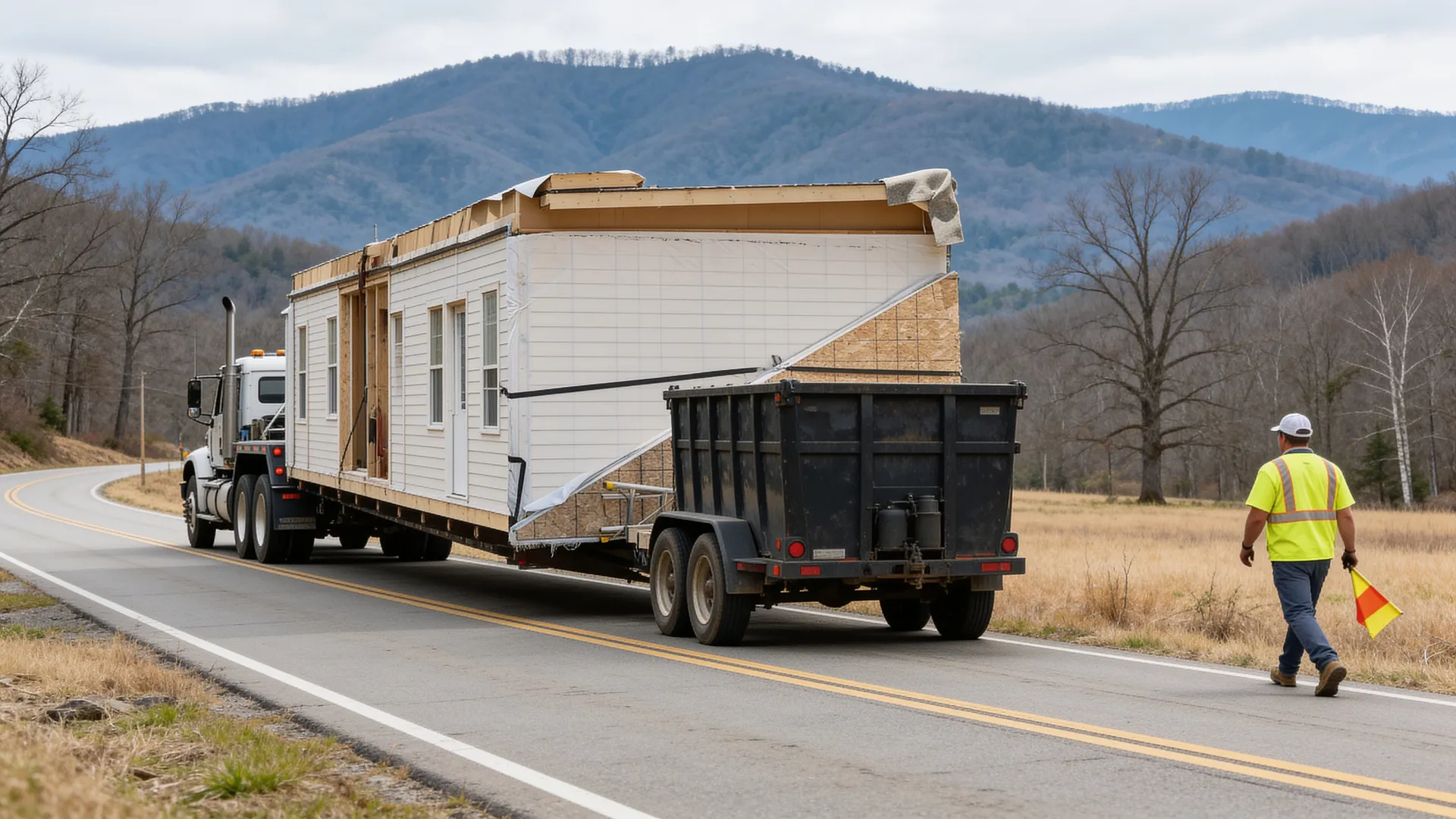
A manufactured home under tow on a rural highway for a long-distance move
There's no legal mileage cap — distance is bounded by cost, the chassis, and a permit chain for every state the route crosses.

Cost is the real ceiling — and it's per mile

The reason most moves are local isn't the law, it's the meter. A move has a fixed component — disconnect, set-up, permits, escorts — and a variable component that scales with distance, because the haul itself is priced largely per mile. A short in-state single-wide runs about $3,000–$8,000 and a double-wide about $7,000–$15,000; stretch that across several states and the per-mile miles, the multiplied permits and escorts, and overnight staging can push a long-distance double-wide to several times the in-state figure. Width matters too — a wider home needs more escorts for every one of those miles. The full fixed-plus-variable breakdown is on our cost to move a mobile home guide, and the escort share specifically is on our escort requirements page.

What the home can survive

Distance is hard on the home, not just the wallet. A manufactured home rides on its own steel frame, axles, and tires, and every mile is road vibration and flex on a chassis that may have sat on a pad for a decade. A unit that handles a 20-mile relocation without complaint can rack the frame, crack drywall, or open the marriage line over 800 miles. A responsible long-haul move therefore starts with the running gear — frequently new axles and tires — and a hard look at the frame and floor, because the older and longer the trip, the more the home has to be prepped to survive it. Whether a given unit is road-worthy in the first place is the threshold question on can a mobile home be moved.

When distance flips the decision to replace

Put cost and condition together and there's a crossover point on every long move: the distance at which buying a comparable home near the destination costs less than hauling and repairing the one you have. For a newer double-wide moving a few hundred miles, the move almost always wins — it's a lot of home to replace. For a 20-year-old single-wide headed across the country, replacement frequently wins once you add the running gear and repairs the trip demands, and for a pre-1976 unit, demolition plus a local purchase is often cheapest of all (see can you move a pre-1976 mobile home). The right answer is always specific to the home and the miles. Put the unit, the origin, and the destination on the form and Mobile Home Mover Pro returns the move cost — and an honest read on whether it beats the alternative — within 24 business hours.

Questions

How far can you move one — straight answers

Is there a legal limit on how far a mobile home can be moved?
No — there's no federal or state mileage cap on moving a manufactured home. You can legally move one across a county or across the country, provided every state the home passes through is properly permitted and the carrier holds the right authority. The real limits aren't legal, they're practical: the cost climbs with distance, the chassis and running gear have to survive the miles, and each additional state adds its own permit and escort rules. Most moves are local for exactly these reasons, but long hauls happen routinely when the math works.
How does distance affect the cost of moving a mobile home?
Distance is one of the biggest cost drivers. A short, in-state move of a single-wide runs about $3,000–$8,000 and a double-wide about $7,000–$15,000 in the regional range, with the haul portion priced largely per mile on top of the fixed set-up, permits, and escorts. Long-distance and interstate moves add per-mile miles, multiply permits and escorts across states, and often require overnight staging — which is why a cross-country move of a double-wide can run several times an in-state one. Past a certain distance, transport plus the repairs an older home needs to survive it can exceed the cost of buying a comparable home closer to the destination. The full breakdown is on our cost to move a mobile home guide.
Can you move a mobile home across multiple states?
Yes, but each state stacks its own requirements. A multi-state move needs a permit for every state the home travels through, escorts that satisfy each state's rules, and a carrier holding interstate operating authority under FMCSA rather than a single-state setup license. The more state lines you cross, the more permit chains and escort handoffs have to be coordinated on the route. Even the two-state Carolina case is involved enough to have its own guide — see moving a mobile home across state lines — and a cross-country move is that, multiplied.
Is a long-distance move hard on the home itself?
It can be, and that's the limit people forget. A manufactured home rides on its own steel frame, axles, and tires, and every mile is a mile of road vibration and flex on a chassis that may have sat on a pad for years. A home that's fine for a 20-mile hop can rack, crack drywall, or stress the marriage line over 800 miles. That's why a long-haul move starts with a hard look at the running gear and the frame — often new axles and tires — and why the older the home, the shorter the distance that makes sense. Whether a specific unit can take the road at all is covered on can a mobile home be moved.
When is it cheaper to replace a mobile home than move it far?
When the distance is long and the home is older. The move cost rises with every mile while the home's value doesn't, so there's a crossover point where buying a comparable home near the destination beats hauling the old one across several states and repairing it to survive the trip. For a newer double-wide moving a few hundred miles, the move usually wins. For a 20-year-old single-wide moving cross-country, replacement often does — and for a pre-1976 unit, demolition plus a local purchase is frequently cheapest of all. We give you the move number against the realistic alternative so the distance decision is made with figures.
Keep reading

Cost, eligibility & the cross-state case

Get a quote

Tell us about your move. We price it.

Unit, route, and timeline — that's all we need. Permits, NCDOT-certified escorts, and on-site setup are included in the quote, and you'll hear back within 24 business hours. We never sell or share your info.

Or call 24/7 — (828) 501-2670

Quote in 24 hours

Goes straight to our crew. We don't sell or share leads.