South Carolina · § 31-17-360 · SC LLR set-up · SCDMV severance

South Carolina Mobile Home Moving Laws

South Carolina runs its own permit, titling, and licensing track — built around § 31-17-360, the county treasurer, and the LLR Manufactured Housing Board. Here's exactly what the law requires to move and set a home in the Palmetto State.

Licensed & insured · NC & SCNCDOT-certified escorts24-hour written quoteOne crew, start to finishPermits pulled in every county Licensed & insured · NC & SCNCDOT-certified escorts24-hour written quoteOne crew, start to finishPermits pulled in every county

Get a free quote

Back within 24 hours — no obligation.

Goes straight to our crew. We never sell or share leads.

Quick answer
What does South Carolina law require to move a mobile home?
South Carolina requires a county moving permit under SC Code § 31-17-360, which the county licensing agent issues only after the treasurer certifies the home's taxes are paid and the utilities are disconnected. A home detitled to the land must be severed back to a movable title through SCDMV first, the set-up is licensed work under the SC LLR Manufactured Housing Board, over-width loads require escorts (law-enforcement escort for the widest), and local zoning governs placement.

South Carolina mobile home moving laws look superficially like North Carolina's — permit, tax clearance, licensed set-up, local zoning — but the machinery underneath is entirely different, and a mover who knows only the NC playbook gets South Carolina wrong. The Palmetto State concentrates its moving rules into one statute, routes the permit through different county officers, ties utility disconnection into the permit itself, and licenses installers through its own board. This guide walks the South Carolina track as the state actually runs it. Mobile Home Mover Pro is a transporter licensed for South Carolina, and we handle the § 31-17-360 chain end to end.

§ 31-17-360: the county moving permit

The center of South Carolina's moving law is SC Code § 31-17-360, part of the state's broader Title 31, Chapter 17 manufactured-housing law. It requires a moving permit issued by the county licensing agent, and the statute is explicit on the gate: the permit cannot issue until the county treasurer certifies the property taxes are paid on the home. South Carolina goes a step further than most states by folding utility disconnection into the same provision — the power has to be properly cut before the home moves — and the permit itself takes the form of a decal on the home. So a clean § 31-17-360 permit simultaneously signals three things: taxes are clear, utilities are off, and the county has authorized the move. As your licensed transporter, we pull the permit, coordinate the treasurer's certification early enough to surface any back-tax surprise, and handle the disconnect step.

Detitling and severance through SCDMV

South Carolina's titling step is its own distinct hurdle. A great many settled SC homes have been detitled to the land — converted to real property — and a home in that status can't legally be towed until it's severed back to a movable title. That severance runs through the SC DMV with a severance affidavit, and only once the title is movable again can the § 31-17-360 moving-permit decal be issued. The procedure — which affidavit, which office, what order — is documented by the Manufactured Housing Institute of South Carolina. This is the single most common reason a South Carolina sale or refinance tied to a move stalls, so on a managed move the severance is initiated the day the move is booked. When the home is also crossing the state line, a second state's title system stacks on top — covered on moving a mobile home across state lines.
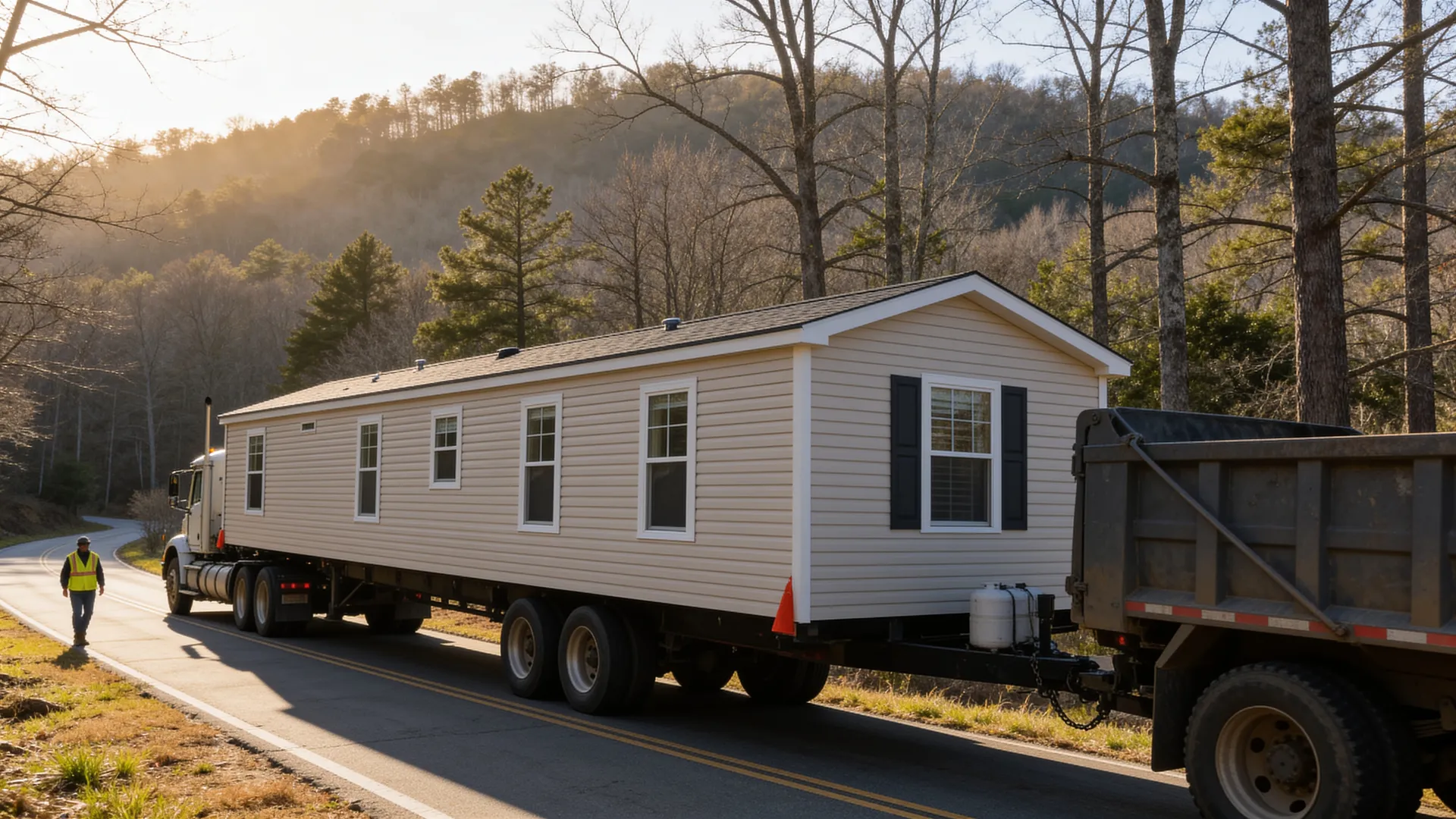
A toter truck hauling a manufactured home in South Carolina under a Section 31-17-360 moving permit
In South Carolina the county licensing agent issues the moving permit under § 31-17-360 — only after the treasurer certifies taxes are paid.

Set-up licensing: the SC LLR Manufactured Housing Board

South Carolina licenses the people who set homes, not just the people who haul them. Installation — building the piers, blocking, leveling, and anchoring — is regulated by the SC LLR Manufactured Housing Board, and it's licensed work subject to the board's installation standards and inspection. The board's licensure framework covers installers and the contractors who move and set manufactured homes. A set that doesn't meet the standard can fail inspection, void the home's warranty, and compromise insurance — which is why an unlicensed install is a false economy in South Carolina just as it is in North Carolina. Anchoring has to meet the home's HUD wind zone, and South Carolina's coast is Zone II territory where the tie-down spec steps up — covered on our anchoring page and, for the coastal-siting question, on can you move a mobile home to the coast.

Escorts and the oversize move

An over-width manufactured home travels in South Carolina under the state's oversize/overweight movement rules, with escort vehicles sized to the load's width and the same daylight-only, weather-restricted constraints a flat-sided load carries anywhere. The difference South Carolina movers plan around is that, for the widest loads, the state can require a law-enforcement escort rather than a civilian flag car — which changes both scheduling and cost. That's a meaningfully different system from North Carolina's certified Escort Vehicle Operator model, and on a cross-line move the two have to be reconciled. The full comparison is on our escort requirements guide.

Placement: zoning and the pre-1976 question

The last gate is local. Towing a home is state law; placing it is county and municipal zoning, enforced through the local office that issues the setup permit. South Carolina jurisdictions vary widely — many restrict manufactured homes to certain districts and enforce age limits, and pre-1976 non-HUD-Code units are commonly barred from being sited at all, even when they can still be legally towed. A home can clear every permit and still have nowhere legal to land if the destination county won't accept its age. Always confirm the receiving county's and any park's rules before paying for the move. The age and HUD-Code question is unpacked on can you move a pre-1976 mobile home, and the North Carolina side of the line is on our North Carolina mobile home moving laws page.

Questions

South Carolina moving law — straight answers

What does South Carolina § 31-17-360 require to move a mobile home?
SC Code § 31-17-360 is the heart of South Carolina's moving law. It requires a moving permit issued by the county licensing agent, and the statute is explicit that the permit cannot be granted until the county treasurer certifies the property taxes are paid on the home. The same section ties in utility disconnection — power has to be properly cut before the move — and the permit takes the form of a decal displayed on the home. As your licensed transporter, we obtain the permit, coordinate the treasurer's tax certification, and handle the disconnect step as part of staging the move.
Do I have to detitle or sever a mobile home to move it in South Carolina?
Usually, if it was titled to the land. A South Carolina home that's been detitled to real property has to be severed back to a movable title before it can legally travel — a step handled through the SC DMV with a severance affidavit, after which the § 31-17-360 moving-permit decal can be issued. If the home is staying movable or being re-sited on leased land, the title process is simpler. The full detitling-and-severance procedure, including the forms, is documented by the Manufactured Housing Institute of South Carolina. This step is the one that most often holds up a closing, so it's started during pre-move staging rather than after the haul.
Is a license required to set up a mobile home in South Carolina?
Yes. South Carolina regulates manufactured-home installation through the SC LLR Manufactured Housing Board, and setting a home — piers, blocking, leveling, and tie-down — is licensed work subject to the board's installation standards and inspection. The board's licensure requirements cover installers and the contractors who move and set homes. A set that doesn't meet the standard can fail inspection and jeopardize the home's warranty and insurance, which is why South Carolina, like North Carolina, treats the install as regulated work rather than casual labor. Anchoring to the home's HUD wind zone is part of that standard — see mobile home anchoring.
Does South Carolina require escorts to move a mobile home?
Yes, for over-width loads — and SC runs its own escort rules separate from North Carolina's. An over-width manufactured home travels under South Carolina oversize/overweight movement rules with escort vehicles sized to the load's width, and for the widest loads South Carolina can require a law-enforcement escort rather than a civilian one, which is a meaningful scheduling and cost difference. Movement is daylight-only and weather-restricted, the same as a sail-sided load anywhere. The state-by-state escort detail, including how it differs from NC's certified-EVO system, is on our mobile home transport escort requirements page.
Can South Carolina counties refuse to let me place an older mobile home?
Yes — placement is local, and it's where many SC moves die. Towing is state law; siting is county and municipal zoning. South Carolina jurisdictions issue the local setup permit, and many enforce age limits or restrict manufactured homes to certain districts, with pre-1976 (non-HUD-Code) units frequently barred from being placed at all even when they're legal to tow. Some counties effectively won't accept an inbound home over a certain age. Confirm the destination county's and any park's rules before you pay to move the home — the age question is unpacked on can you move a pre-1976 mobile home, and coastal wind-zone siting limits are on can you move a mobile home to the coast.
Keep reading

Permits, escorts & the other Carolina

Get a quote

Tell us about your move. We price it.

Unit, route, and timeline — that's all we need. Permits, NCDOT-certified escorts, and on-site setup are included in the quote, and you'll hear back within 24 business hours. We never sell or share your info.

Or call 24/7 — (828) 501-2670

Quote in 24 hours

Goes straight to our crew. We don't sell or share leads.